
How do we calculate repeatability?
2023-07-13WIKI
In laser diffraction particle size analysis, repeatability refers to the measurement difference between multiple measurements of the same sample under the same measurement conditions in a short period of time. The repeatability is characterized by the following conditions:
● The measurements should be carried out following the same measurement procedure under the same measurement conditions and in the same location.
● The measurements should be implemented by the same operator.
● The sample should be the same.
● The particle size analyzer used for the measurements should be the same.
● The measurement should be repeated over a short period of time.
The calculation of the repeatability for each size channel, such as D50, is shown below:
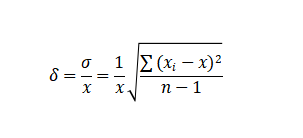
where n is the number of measurements (usually n ≥10), xi is the each individual measurement result, xi is the mean of the measurement results, δ is the standard deviation.
 |
Struggling to grasp particle analysis concepts? Our new Beginner's Guide to Particle Analysis is here to help you grasp these concepts in the most accessible manner possible. Download it as a PDF to read on the train, on the plane, or wherever else there’s no internet. |

Recommended articles
Rate this article
Share On


Related Particle Size Analyzer
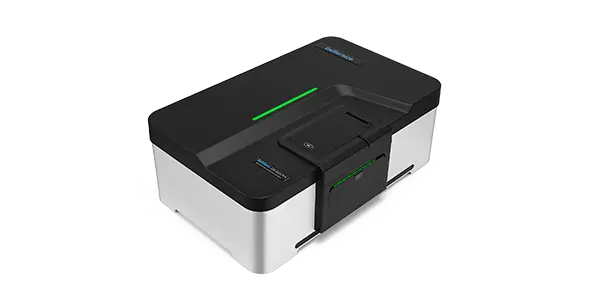
BeNano 180 Zeta Pro
Nanoparticle Size and Zeta Potential Analyzer
Technology: Dynamic Light Scattering, Electrophoretic Light Scattering, Static Light Scattering
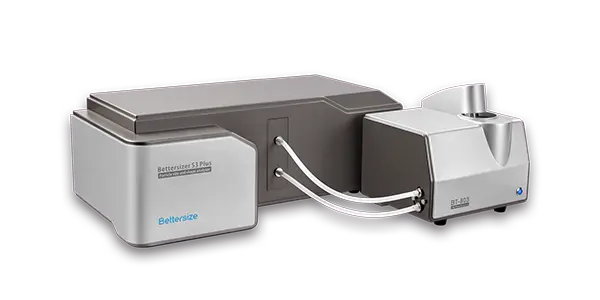
Bettersizer S3 Plus 126
Laser Diffraction Particle Size and Shape Analyzer
0.01 - 3,500μm(Laser System)
2 - 3,500μm(Image System)
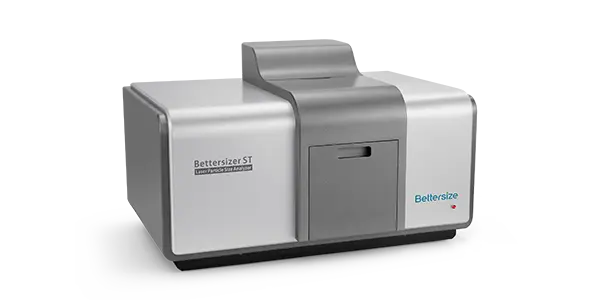
Bettersizer ST
One-stop Particle Size Analyzer
Dispersion type: Wet
Size range: 0.1 - 1,000µm
Repeatability: ≤1% variation