
What is image binarization?
2023-07-17WIKI
Image binarization is a process that converts the color or grayscale original captured images into digital binary images consisting of small black and white pixels. Image binarization is the basis of image analysis and is the key step in image processing used for particle identification.
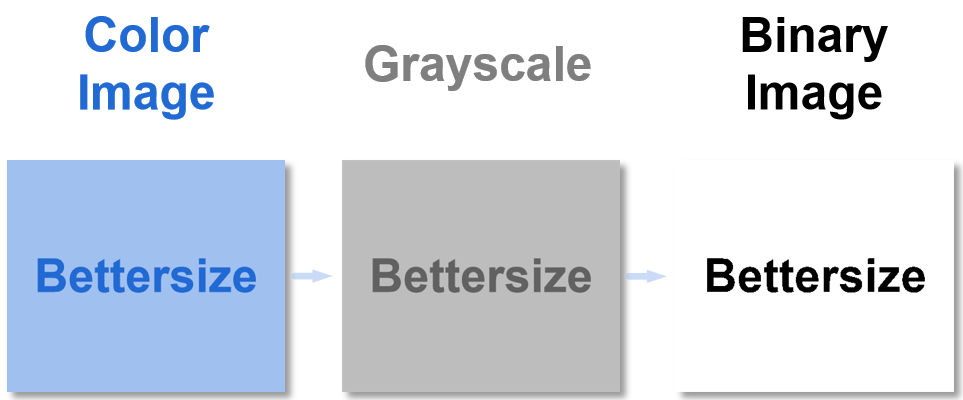
The measurement system provides two image binarization methods called automatic image binarization and double-threshold image binarization. Automatic image binarization is a binarization threshold determination method with which the binarization threshold is formulated automatically based on the original image.
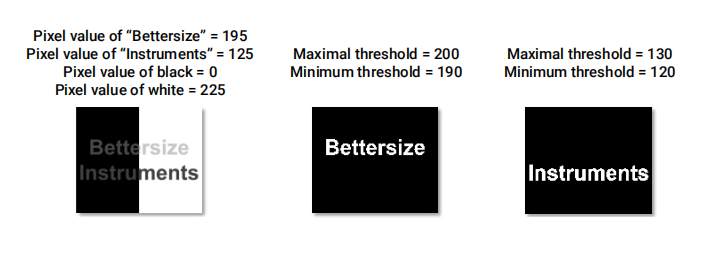
In addition to the automatic image binarization, users are allowed to use double-threshold image binarization to highlight the pixels within a specific range of pixel values. In double-threshold image binarization, only pixels whose pixel values are larger than or equal to the minimum threshold and lower than the maximal threshold will be identified as bright pixels. Other pixels will be recognized as dark pixels. An example is shown below. The binarization process varies with modified thresholds.
 |
Struggling to grasp particle analysis concepts? Our new Beginner's Guide to Particle Analysis is here to help you grasp these concepts in the most accessible manner possible. Download it as a PDF to read on the train, on the plane, or wherever else there’s no internet. |

Recommended articles
Rate this article
Share On


Related Particle Size Analyzer
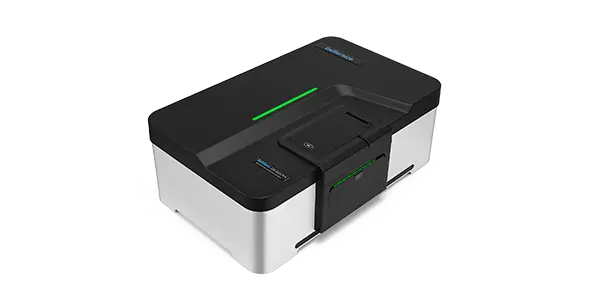
BeNano 180 Zeta Pro
Nanoparticle Size and Zeta Potential Analyzer
Technology: Dynamic Light Scattering, Electrophoretic Light Scattering, Static Light Scattering
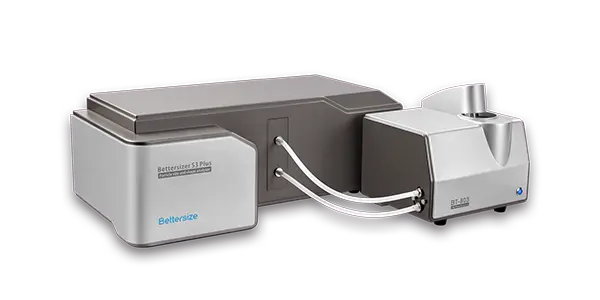
Bettersizer S3 Plus 126
Laser Diffraction Particle Size and Shape Analyzer
0.01 - 3,500μm(Laser System)
2 - 3,500μm(Image System)
Bettersizer ST
One-stop Particle Size Analyzer
Dispersion type: Wet
Size range: 0.1 - 1,000µm
Repeatability: ≤1% variation